Monday, February 09, 2009

Changing Times or Not

Having just cleaned out my desk recently with my new business plan in place, I found an old newspaper, The Everett Herald, from March 1992. The headlines read: "Boeing Gives Layoff Slips to 3,000"; "Unemployment rate rises to highest level in more than six years" - 7.3%.And then I compare the headlines with a more recent post February 2009: "Boeing Gives Layoff Notices to 6,000", Unemployment rate rises to 7.1% in Snohomish County in December 2008".Catch any differences, probably not. It's the real estate cycle. We just happen to be in the "down cycle" but remember, what goes down, needs to come up. It will take awhile, but it will happen.

It's a great time to buy in the Snohomish County area. With rates at an all time low, still plenty of inventory, and seller concessions, buyers hold the upper hand. Well you say, "I need to sell to buy". OK, the key is to price your home realistically to sell and make it up on the buying end.

For expert advice in the Snohomish County area, call Karen Villa Schweinfurth 425-308-3669, or email: karen@karensvillas.com.

Also visit my web site for ALL your real estate needs. Search for properties in all of Washington, get buyer/seller tips, financing information, do your own market analysis. It's all there for the taking.

Hope you find this information helpful. Make it a great day where you are.

Karen Villa Schweinfurth, ABR, CRS, SRES, e-PRO
RE/MAX Northwest Realtors
RE/MAX Hall of Fame Member
REALTOR of the Year 2008

Labels: , , , ,

Monday, November 24, 2008

Four Bedroom Two Story with Master on Main

Photo Gallery
Formal Lving Room
Kitchen
Cook Island and Eating Area
Family Room
Family Room
Play Set
Deck and Hot Tub
Yard
Description
Built in 2000 this home has four bedrooms with the master on the main. The second master is located upstairs. The home sits on a 10,000+ sq. ft. lot that is fenced and has RV parking in addition to the three car garage. There is a sprinkler system with timer to keep your garden on track and a very sunny, private yard for gardening.

Fresh interior paint just completed. The kitchen has slab granite and stainless with a Jennaire island. The family room has a gas fireplace with custom mantle and Bose surround sound stereo system. There are two water heaters and a heat pump for central A/C. The master suite has a soaking tub, two sinks and an oversized walk in closet. The master opens to the deck and hot tub for those cozy nights.

Job transfer forces sale and we are priced aggressively. Don't miss this great value. Minutes to freeways and shopping and a peek a boo view of the sound too.
Features
Bedrooms: 4
Bathrooms: 2.5
Parking Spaces: 3
Year Built: 2000
Subdivision: Stanwood/Candle Ridge
Lot Size: 10,018
Garage Size: 3
School District: Stanwood
Square Footage: 2272
Agent Name: Karen Villa Schweinfurth, CRS, ABR
Broker: RE/MAX Northwest Realtors
MLS #: 281888281
Location
Powered by vFlyer.comvFlyer Id: 2055871

Labels: , , ,

Monday, October 06, 2008

Medical Identity Theft

With identity theft on the rise these days, most of us are already taking steps to protect ourselves. But did you know that there’s now a growing form of identity theft known as “medical identity theft” that can not only devastate victims’ finances, but also compromise their health, too. According to Joy Pritts, JD, author of Your Medical Record Rights, here’s what you need to know.

What is Medical Identity Theft?

Medical identity theft occurs when criminals access victims’ medical records. Since medical records contain a person’s social security number and credit card information (if bills have been paid via credit card), criminals can open accounts and make fraudulent charges. However, criminals also gain access to victims’ health insurance policy information and medical histories, and they can create forged health insurance cards to sell to people who are uninsured and need expensive medical treatment. A person who buys a fake health insurance ID card would then seek treatment using the victim’s name and policy number, and then disappear, leaving the victim with the bills to pay.


Why Should You Be Concerned?

Victims of medical identity theft not only have to repair their credit and convince credit agencies and service providers that bills are fraudulent, they also have to correct inaccurate medical information that becomes part of their health records. Victims could be denied life insurance or individual health insurance if their record shows treatments that they did not have. In addition, victims could receive treatments or medicines that could be harmful to them on the basis of inaccurate content in their medical records.


Steps to Take if You Suspect a Medical Identity Theft

Read all bills and “Explanation of Benefits” statements from your insurance company to verify they are for treatment you received.


If a bill or statement refers to treatment you did not receive, contact the employee in charge of investigating fraud at your insurance company and at the medical facility involved and explain the situation. Follow up with a letter sent via registered mail with return receipt once again explaining the situation, asking for any bills to be voided, and asking that your medical record be amended to state that you did not have this health problem or receive this treatment.
Report the identity theft to the police department and state’s attorney general’s office.
Contact the health care providers you use, explain the situation, ask if the erroneous information has been added to the providers’ records, and if so, ask them to correct the records.

Report the fraud to the major credit bureaus and set up fraud alerts. Also, request free copies of your credit reports to make sure no new fraudulent accounts have been opened.

Review your medical records every few years to make sure there are no errors.


To learn more about your medical record rights, visit http://ihcrp.georgetown.edu/privacy/records.html.

Labels: , , , ,

Tuesday, September 16, 2008

What Steps Consumers Can Take To Protect Themselves from a "Hurricane Wall Street"

This information comes as a courtesy from my lender, Ken Allen, Branch Manager with MetLife Home Loans. You can reach him at 425-6702418 or ken@kenallen.com.

With Wall Street engulfed in the biggest financial crisis in a generation, there are a few things that consumers can do to protect themselves from this perilous storm,” said Gibran Nicholas, Chairman of the CMPS Institute, an organization that certifies mortgage bankers and brokers.

#1 – Make Sure Your Investments Are Protected Through the SIPC
The Securities Investor Protection Corporation (SIPC) was created in 1970 as a non-profit, non-government organization funded by its members: broker-dealers that trade in stocks, bonds, mutual funds and other investments in the financial markets. The primary role of the SIPC is to return funds and investments to investors if the broker-dealer holding these assets becomes insolvent. “The SIPC does not cover you if the value of your investments goes down,” said Nicholas. “The SIPC makes sure that you recover the assets in your investment accounts if your stock brokerage firm or the financial institution where you hold your investment account goes bankrupt. For example, if you have an account at Lehman Brothers or any other financial institution that goes bankrupt, the SIPC will make sure that you recover the assets you hold in the investment account. However, if the stocks or other investments that you hold in your investment accounts have lost value due to a decline in stock prices or market conditions, the SIPC will not reimburse you for the lost value of your investments.”

SIPC coverage is limited to $500,000 per customer, including up to $100,000 for cash. “This does not mean that you will only recover $500,000 worth of your account,” said Nicholas. “Under virtually all circumstances, you will recover the full amount as part of the unwinding and liquidation of the brokerage firm.” If sufficient funds are not available in the firm’s customer accounts to satisfy all the claims, the reserve funds of the SIPC are used to supplement the distribution, up to a ceiling of $500,000 per customer, including a maximum of $100,000 for cash claims. Additional funds may be available to satisfy the remainder of customer claims after the cost of liquidating the brokerage firm is taken into account. According to the SIPC web site, it typically takes one to three months for investors to recover their property from an account at a failed brokerage firm.

SIPC covers stocks, bonds, mutual funds and other securities registered with the Securities and Exchange Commission (SEC), which is the government agency that oversees the SIPC. The SIPC does not cover unregistered investments such as commodity futures contracts or commodity options. In response to the impending collapse of Lehman Brothers yesterday, the SEC issued a press release specifically indicating that it is taking actions to ensure that those who have accounts at Lehman Brothers will recover the assets in their accounts in the event that Lehman becomes insolvent.

#2 – Make Sure All Your Bank Accounts Are Covered with FDIC Insurance
The Federal Deposit Insurance Corporation (FDIC) is an independent federal agency that was created in 1933 to insure bank depositors and protect them against the failure of their bank. The current limit on FDIC insurance is $100,000 for bank accounts and $250,000 for retirement accounts. “You should make sure that all deposits over the limit are held in separate accounts owned by different individuals or entities,” said Nicholas. “This means that if you are married with two children, you can have one account in your name, one account in the name of your spouse and one account each in the names of your two children, all with the maximum of $100,000 in deposits, and you would still be fully insured for the full $400,000.”

Additionally, if you have a corporation or limited liability company (LLC), your business can also have an account at that same bank and it will also be insured up to the $100,000 limit. The only caveat is that the company must be engaged in an "independent activity," meaning that the entity is operated primarily for some purpose other than to simply increase your insurance coverage. When two or more insured banks merge, the deposits from the assumed bank continue to be insured separately for at least six months after the merger. This grace period gives you the opportunity to restructure your accounts, if necessary.

If your deposits at one bank exceed the FDIC limits, it’s advisable to move the money and open up some new accounts at other banks that are not affiliated with one another and that are not owned by the same parent company. Additionally, you may consider asking your bank if they participate in the CDARS® network. CDARS® stands for Certificate of Deposit Account Registry Service®, and it is offered by nearly 2,500 financial institutions across the country. When you place a large deposit with a financial institution that is part of the CDARS network, the financial institution uses CDARS to place your funds into certificates of deposit issued by other banks in the network. This occurs in increments of less than $100,000 to ensure that both principal and interest are eligible for full FDIC insurance.

#3 – Max Out Your Home Equity Line of Credit Before Your Lender Cuts Off the Limit
“Lenders have been arbitrarily reducing credit limits on home equity lines of credit,” said Nicholas. “If you still have credit available on your home equity line, it could be very beneficial for you to draw out the money now before the lender reduces your limit. In this environment, it’s probably a safer bet to have the cash sitting in your FDIC-insured bank account in case you lose your job or in case you need the funds for any other reason.”

#4 – Stop Making Extra Mortgage Payments and Take Out a Mortgage Even If You Don’t Need One
“Cash is king in a liquidity crunch,” said Nicholas. “The worst thing you can do in this environment is dump more of your cash into your home equity because you may not be able to get access to it if you run into financial difficulties, if the housing market continues to decline, or if the credit crunch gets worse. Although it sounds counter-intuitive, you should have as big a mortgage as possible – even if you don’t need it - and leave as much cash as possible in a safe, liquid place that is readily available to you. This empowers you to weather the storm and also have your funds available to take advantage of bargain opportunities that are becoming available because others have not followed this advice. In this environment, the one with the most cash wins.”

Ken is a CMP, Certified Mortgage Professional.

About CMPS Institute: CMPS is a training, examination, certification and ongoing membership program for financial professionals who provide mortgage and real estate equity advice. Recognized for its preeminence within the industry, the CMPS curriculum represents the core knowledge expected of residential mortgage advisors regardless of the diversity of specializations within the industry. Over 5,500 financial professionals have gone through the program since its launch in 2005.

For all your real estate needs, call Karen Villa Schweinfurth, ABR, CRS, SRES, e-PRO Internet Certified, at 425-308-3669.

Labels: , , , , , ,

Wednesday, September 10, 2008

Fannie Mae and Freddie Mac Take Over

Here is a quick video of what is occurring since the government bail out of Freddie Mac and Fannie Mae. This was created by my lender, Ken Allen, of MetLife. You can reach Ken at 425-670-2418 for all your financial questions or ken@kenallen.com.

Hopefully this will encourage buyers that are "sitting on the fence" to start shopping for homes and this should reduce our standing inventory.

Should you have questions regarding your purchase or sale of your home, contact me at 425-308-3669 or karen@karensvillas.com. To preview existing inventory you can visit my web site.

Labels: , ,

Friday, June 20, 2008

National Association of Realtors Code of Ethics

The Code of Ethics of the National Association of Realtors is the promise to the public that when dealing with a real estate agent that is a REALTOR, they can expect honext and ethical treatment in all transaction-related matters. Only REALTORS pledge to abide by the Association's Code of Ethics and only REALTORS are held accountable for their ethical behavior.Some of the basic principles of the Code of Ethics include:

~ Protect and promot your client's interests, but be honest with all parties

~ Avoid exaggeration, misrepresentation and concealment of pertinent facts. Do not reveal facts that are confidential under the scope of your agency relationship.

~ Disclose present or contemplated interest in any property to all parties.

~ Avoid side deals without your client's informed consent.

~ Accewpt compensation from onl one party, except with full disclosure and informed consent.

~ Keep the funds of clients and customers in escrow

~ Assure, whenever possible, that transactional details are in writing

~ Provide equal service to all clients and customers

~ Be knowledgeable and pempetent in the fields of practice in which you ordinarily engage. Obtain assistance or disclose lack of experience if necessary.

~ Do not engage in the unauthorized practice of law.

As you can see as a consumer, We are dedicated to serving America's property owners and have a strong commitment to follow the Code of Ethics. The National Association of Realtors is the largest professional association at over 900,000 members strong.

So whether you are buying or selling, look for that trademarked "R" of which we are so proud of and look for a REALTOR, as not all licensees are REALTORS.

Karen Villa Schweinfurth, REALTOR, ABR, CRS, SRES, e-PRO, ACRE

Labels: , , , , ,

The Buying Process in Washington State

Many of you think that when we find your dream property, write an offer and get it accepted, the Realtor's job is done. Far from that point.....our job is just beginning.
In addition to helping you find your dream home through the listings we have sent you, making appointments to show you these listings, we are always working FOR you.

When we first met we gave you a copy of the "Laws of Real Estate Agency" that describes your legal rights in dealing with a real estate broker or salesperson in Washington State. It describes the duties of a licensee, a seller's agent, a buyer's agent, a dual agent, compensation, vicarious liability, imputed knowledge and notice and interpretation. You also received my buyer book that contains information on your purchase process and an introduction to my team of professionals; my transaction coordinator, my lender, my title company representative, my escrow officer, and my inspectors.

As a buyer's agent we are to: Be loyal to the buyer by taking no action that is adverse or detrimental or the buyer's interest in a transaction; to timely disclose to the buyer any conflicts of interest, to advise you to seek expert advice on matters relating to the transaction that are beyond our expertise, not to disclose confidential information from or about the buyer, except under subpoena or court order, even after termination of the agency relationship and make a good faith and continuous effort to find a property for you, the buyer, except that a buyer's agent is not obligated to: seek additional properties to purchase while the buyer is a party to an existing contract to purchase, or show properties as to which there is no written agreement to pay compensation to the buyer's agent.

We then begin the process of negotiating the contract in your best interest. Once we reach mutual acceptance, we send the contract to our assistant who will set you up on an internet web-based program so that we can communicate through emails what is happening on your transaction. You have 24/7 access to this file. We contact the selling agent, lender, title company, escrow company and they all become a party to this transaction.

We set up your inspection by coordinating that with your inspector and the seller. We negotiate after the inspection is completed and make sure all parties are aware of what's happening.

We follow up regularly with the lender to make sure they are on track with ordering the appraisal, getting paperwork to the underwriter and getting final loan approval.

We provide you with utility information and advise you when to contact the companies to get local utilities in your name.

We then make sure that the lender gets their paperwork to the escrow officer in a timely manner so that they can schedule your signing appointment. Remember, we talked about this, this is where you sign closing papers, deposit your funds to close. The paperwork is then sent back to the lender for a 24 hour review. Once the lender releases the package for recording, we follow up with the escrow office to make sure they are going to the court house to record your documents. Once that happens and we receive recording numbers, the escrow officer releases the fund and you CLOSE. You then are awarded keys according to the terms of the purchase and sale agreement.

We meet with you and hand over keys. You have your beautiful home, finally. We then follow up with post closing instructions to make sure there are no details left to discuss.

Phew, you say, you didn't realize we did all that. Yes, we do, and with zest, as you see provide you with the American Dream - home ownership and if we can do that successfully, our job is well done.

Congratulations, on your purchase. You'll be receiving a welcome home gift from my team. We wish you many years of happiness. "Oh, by the way, if you know of a friend or family member that could use our services, we'd be happy to speak to them and offer them the same level of service we gave you." Good Luck in your new home!

For Buyer Agency in Washington State contact: Karen Villa Schweinfurth, ABR, CRS, SRES, ePRO, ACRE
Your Snohomish County Expert

An ABR, (Accredited Buyer Representative) designation from the National Association of Realtors

Labels: , , , , , ,

Wednesday, May 28, 2008

Are The Financial Heavens Opening up in Washington State

JP Morgan Chase is expanding it's home lending business in Washington State and will more than quadruple it's market share by the end of the year. Chase has seven branches and plans to open up four more offices this year.

As reported in the Puget Sound Business Journal "The financial's giant's plans are reflective of the state's rosy reputation among mortgage bankers, and also could indicate a resurgence of the mortgage industry as stable lenders step in to fill the gaps left by those that have gone out of business."

They also reported that Golf Savings Bank, a subsidiary of Spokane-based Sterling Financial Corp., is also expanding its home loan business and plans to add 20 new loan officers by the end of the year probably hiring former employees of Washington Mutual who just closed 23 offices in Washington State.

So buyers, get off the fence, we have a great economy here in Snohomish County, interest rates are low and there is plenty of inventory to choose from.

Contact me, Karen Villa Schweinfurth, ABR, CRS, SRES, e-PRO, REALTOR - "As no one knows Washington Real Estate like a Washington Realtor - 425-308-3669.

http://www.karensvillas.com

Labels: , , , , , ,

Thursday, June 21, 2007

Senator Patty Murray Signs Bill

While myself and more than 80 Washington REALTORS® were in Washington DC advocating for issues on our industry's behalf, Sen. Patty Murray signed on to S. 413, the Community Choice in Real Estate Act, which maintains the longstanding national policy prohibiting the mixing of banks and commerce.

Other members of Congress from Washington state who support the companion bill HR 111 in the House of Representatives are Reps. Jay Inslee, Rick Larsen, Brian Baird, Norm Dicks, Cathy McMorris Rodgers, Dave Reichert and Adam Smith.


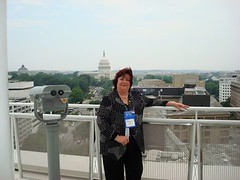
Me with a view of the Capital.


Me with Congressman Rick Larsen

Visit my website for all your Washington real estate needs!

Labels: , , , , ,